Cybersecurity incident response services help businesses prepare for security incidents with clear roles, containment procedures, recovery steps, communication plans, and professional response support.
Cybersecurity incident response services help organizations prepare for, identify, contain, investigate, and recover from security incidents before confusion slows down the response.
Security incidents rarely happen at a convenient time. A suspicious login, compromised endpoint, ransomware alert, exposed account, or unexpected network activity can quickly require decisions from IT, management, legal teams, vendors, and other stakeholders.
Why Cybersecurity Incident Response Services Matter
During a security incident, every minute can matter. Without a clear response process, teams may lose time deciding who should act, which systems should be isolated, who should be notified, and whether normal operations can safely continue.
A documented incident response plan gives the organization a starting point before pressure builds. As a result, important decisions do not need to be invented during the incident itself.
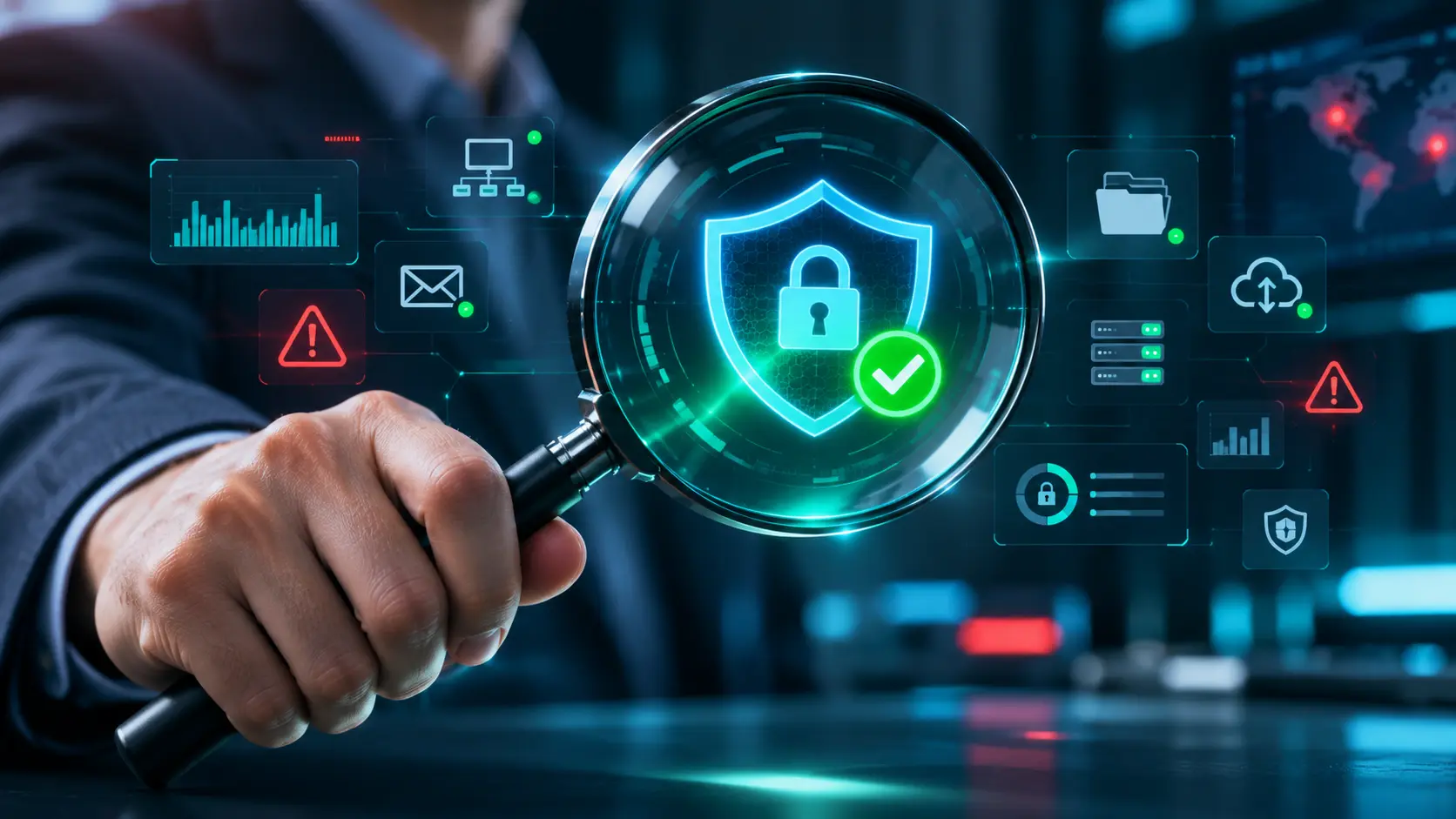
What Is a Cybersecurity Incident Response Plan?
A cybersecurity incident response plan is a documented process that explains how an organization will prepare for and respond to suspected or confirmed cybersecurity incidents.
CISA describes an incident response plan as a written document that helps an organization before, during, and after an incident by defining responsibilities, key contacts, and important response activities.
The plan should answer practical questions such as:
- Who leads the response?
- Who investigates technical activity?
- Which systems may need to be isolated?
- Who communicates with employees and leadership?
- Who contacts legal counsel or outside specialists?
- How will evidence and logs be preserved?
- How will affected systems be restored?
- How will lessons from the incident be documented?
The goal is not to predict every possible incident. Instead, the plan provides a repeatable structure that can be adapted to the situation.
Cybersecurity Incident Response Services Start With Preparation
Cybersecurity incident response services are most effective when preparation begins before a serious security event occurs.
NIST's current incident response recommendations integrate incident response throughout cybersecurity risk management instead of treating response as something that begins only after an attack.
Preparation may include reviewing systems, identifying important assets, confirming security monitoring, maintaining backups, documenting contacts, and defining how incidents will be escalated.
Because these tasks are completed in advance, teams can focus more quickly on investigation and containment when something actually happens.
Define Incident Response Roles Before an Emergency
One of the most important parts of an incident response plan is deciding who is responsible for each part of the response.
For example, the person coordinating the overall incident may not be the same technician investigating endpoint activity. Communications, legal review, executive decisions, and technical containment may all involve different people.
Common roles may include:
- Incident manager or response coordinator
- IT or security personnel
- Senior leadership
- Legal counsel
- Human resources
- Communications or public relations
- Cyber insurance contacts
- Outside cybersecurity specialists
- Critical technology vendors
Clear ownership helps reduce duplicated work and missed tasks when several people become involved at once.
Detection Comes Before Response
Businesses cannot respond effectively to an incident they have not detected.
Security monitoring can provide visibility into endpoints, networks, user accounts, firewall events, vulnerabilities, and other activity that may require investigation.
SecuraLynx's managed security monitoring services combine monitoring with proactive auditing, threat response, endpoint protection, network security, and regular reporting.
When suspicious activity is identified early, responders have a better opportunity to investigate the situation before the impact becomes larger.
Cybersecurity Incident Response Services Support Investigation
Cybersecurity incident response services can help determine what happened, which systems were involved, and whether the activity is still continuing.
Investigation may involve reviewing:
- Endpoint alerts
- User account activity
- Authentication logs
- Network traffic
- Firewall events
- Cloud service logs
- Email activity
- File changes
- Security alerts and monitoring history
The goal is to understand the scope before making unnecessary or incomplete response decisions.
Containment Helps Limit the Incident
Once suspicious activity is confirmed, containment aims to prevent the incident from spreading or creating additional damage.
Depending on the situation, containment may involve:
- Isolating a compromised endpoint
- Disabling a breached user account
- Blocking malicious network traffic
- Removing remote access
- Resetting compromised credentials
- Restricting access to affected systems
- Temporarily taking selected services offline
Containment decisions should balance security with business operations. For example, disconnecting a critical server may stop malicious activity but also interrupt important services.
EDR Can Support Cybersecurity Incident Response
Endpoint Detection and Response can provide detailed information about suspicious activity on laptops, desktops, and servers.
Depending on the platform and configuration, EDR may support actions such as isolating a device, stopping a suspicious process, quarantining files, and collecting additional investigation data.
SecuraLynx's managed EDR services include endpoint monitoring, alert review, threat investigation, incident escalation, and containment support.
This makes endpoint visibility particularly useful when responders need to understand what happened before and after a security alert.
Eradication Removes the Cause of the Incident
Containment limits the immediate impact, while eradication focuses on removing the cause of the incident.
NIST's incident response guidance describes eradication as eliminating persistence mechanisms and entry points after containment.
Depending on the incident, that may involve:
- Removing malware
- Deleting unauthorized accounts
- Closing exposed services
- Applying security patches
- Correcting vulnerable configurations
- Rotating credentials
- Removing unauthorized access
Before recovery begins, responders should understand whether the original weakness has actually been addressed.
Recovery Is More Than Turning Systems Back On
Recovery focuses on restoring affected systems and returning business operations to a trusted state.
NIST notes that recovery can include restoring clean backups, rebuilding systems, replacing compromised files, installing patches, changing passwords, and tightening security controls.
This means recovery should not simply restore the exact condition that existed before the incident if that condition contributed to the compromise.
Instead, restoration should include the security improvements needed to reduce the chance of the same incident happening again.
Backups Are Part of Incident Recovery
Reliable backups can become critical when an incident damages, encrypts, deletes, or corrupts important data.
Businesses should know which systems are backed up, how quickly they can be restored, and whether backup copies are protected from the same incident affecting production systems.
SecuraLynx provides managed backup and recovery services designed to support continuity of important systems and data.
In practice, incident recovery is much easier when backup procedures are already documented and tested.
Communication Should Be Part of the Incident Response Plan
Technical response is only one part of a cybersecurity incident. Businesses may also need to communicate with leadership, employees, customers, vendors, insurers, regulators, or law enforcement.
CISA recommends planning key contacts and communications before an incident occurs. It also suggests preparing basic public messaging in advance for situations where outside parties begin asking questions.
A communication plan may identify:
- Who can approve external statements
- Who communicates with employees
- Who contacts legal counsel
- Who contacts cyber insurance
- Who communicates with affected customers
- Who coordinates with critical vendors
Clear communication can help prevent conflicting instructions and unnecessary confusion during an already stressful event.
Recent Incidents Show Why Response Planning Matters
Real-world cybersecurity incidents often require organizations to activate technical response and business continuity processes at the same time.
In October 2026, BleepingComputer reported that TFG London activated its incident response and business continuity plans after detecting a cyberattack that disrupted several IT systems.
More recently, Quest Diagnostics disclosed that it activated its incident response protocol after discovering unauthorized access to one of its systems.
These incidents illustrate an important point: incident response is not only about investigating technical alerts. It also involves coordinating operations, communications, recovery, and business decisions.
Cybersecurity Incident Response Services Need Escalation Procedures
Cybersecurity incident response services should include a clear process for deciding when an alert becomes an incident that requires broader attention.
Not every blocked login attempt should trigger a company-wide emergency. At the same time, a confirmed compromised administrator account may require immediate escalation.
Escalation criteria may consider:
- Number of affected systems
- Sensitivity of affected data
- Type of compromised account
- Evidence of data theft
- Operational disruption
- Persistence of the attacker
- Regulatory or contractual requirements
- Potential customer impact
Defining these thresholds in advance helps responders know when additional people need to become involved.
Evidence Preservation Supports Investigation
During an incident, responders may need logs, files, endpoint data, account history, and other evidence to understand what happened.
If systems are wiped or changed too quickly, valuable information may be lost.
For this reason, incident response procedures should consider how relevant evidence will be collected and preserved before major remediation steps are performed.
Legal counsel or qualified forensic specialists may also provide guidance when evidence needs to support regulatory, insurance, or legal requirements.
Tabletop Exercises Help Test the Plan
A written plan is useful, but businesses should also understand how the plan works in practice.
CISA recommends conducting tabletop exercises in which participants work through a simulated cybersecurity incident.
For example, the exercise might begin with an employee reporting a suspicious message or a monitoring system detecting unusual activity.
Participants then discuss who would respond, which systems would be reviewed, who would be notified, and how the organization would make important decisions.
These exercises can uncover missing contact information, unclear responsibilities, or assumptions that need to be corrected before a real incident occurs.
Incident Response Plans Should Be Reviewed Regularly
Businesses change over time. Employees leave, vendors change, systems move to the cloud, new applications are adopted, and contact information becomes outdated.
Because of this, incident response plans should be treated as living documents.
CISA recommends reviewing the plan regularly, while NIST emphasizes improving incident response based on lessons learned and changes in the organization's environment.
Updates may be needed after:
- A major technology change
- A security incident
- A tabletop exercise
- A change in leadership
- A new compliance requirement
- A change in cybersecurity vendors
- A major infrastructure migration
Cybersecurity Risk Assessments Can Identify Response Gaps
Organizations may have security technology in place without knowing whether their incident response process is ready for a serious event.
SecuraLynx's cybersecurity risk assessment evaluates security practices using the NIST Cybersecurity Framework and includes incident readiness as part of the broader review.
A guided assessment can help identify gaps involving monitoring, account security, devices, backups, vulnerabilities, policies, and response readiness.
From there, improvements can be prioritized before an actual incident tests the process.
What Should Cybersecurity Incident Response Services Include?
Businesses evaluating cybersecurity incident response services should look beyond whether someone is available to answer a phone call.
Useful incident response capabilities may include:
- Incident response planning
- Security alert review
- Threat investigation
- Incident escalation
- Endpoint containment support
- Account access remediation
- Network response support
- Log and evidence review
- Recovery coordination
- Remediation recommendations
- Security reporting
- Post-incident review
The exact service depends on the provider and scope. Businesses should understand which activities are covered before an emergency occurs.
How SecuraLynx Supports Incident Response
SecuraLynx includes threat response and incident support across multiple layers of its managed cybersecurity services.
Its broader service approach combines:
- Managed security monitoring
- Endpoint Detection and Response
- Endpoint incident support
- Network threat monitoring
- Network incident-response support
- Vulnerability scanning
- Proactive auditing
- Backup and recovery
- Cybersecurity assessments
This defense-in-depth approach allows detection, investigation, response, remediation, and recovery to work together instead of treating incident response as a stand-alone tool.
Frequently Asked Questions
What is a cybersecurity incident response plan?
A cybersecurity incident response plan is a documented process that defines roles, contacts, investigation, containment, recovery, communication, and other procedures used during a suspected or confirmed security incident.
Why does a business need an incident response plan?
A plan helps teams make faster and more consistent decisions during a security incident by defining responsibilities and response steps before an emergency occurs.
What are the main stages of incident response?
Modern incident response commonly includes preparation, detection, investigation, containment, eradication, recovery, communication, and improvement based on lessons learned.
How often should an incident response plan be reviewed?
The plan should be reviewed regularly and whenever major business, technology, staffing, vendor, or compliance changes occur. Reviews should also follow significant incidents and tabletop exercises.
What is a cybersecurity tabletop exercise?
A tabletop exercise is a simulated cybersecurity scenario in which employees and stakeholders discuss how they would respond using the organization's existing incident response procedures.
What are cybersecurity incident response services?
Cybersecurity incident response services provide professional support for preparing, detecting, investigating, containing, remediating, and recovering from cybersecurity incidents.
Make Cybersecurity Incident Response Services Part of Your Security Strategy
Cybersecurity incident response services help businesses prepare for incidents before urgency and uncertainty make decision-making more difficult.
A strong response process connects people, technology, communications, monitoring, containment, recovery, and cybersecurity risk management.
The best time to define those responsibilities is before a compromised endpoint, stolen account, ransomware event, or network intrusion forces the organization to make decisions under pressure.
Ultimately, incident response is not only about reacting to a cyberattack. It is about helping the organization continue making informed decisions while the incident is being investigated and resolved.
Is Your Business Ready for a Cybersecurity Incident?
SecuraLynx can help review your current security controls, monitoring, endpoint protection, network security, backups, vulnerabilities, and incident-response readiness.
Start with a cybersecurity assessment to identify gaps and prioritize the security improvements that matter most.
Explore Cybersecurity Assessments