Managed firewall services help keep security rules, firmware, monitoring, backups, and network controls aligned with the systems your business actually uses.
Managed firewall services provide ongoing configuration, monitoring, updates, rule reviews, backups, and technical support for one of the most important controls protecting a business network.
Installing a firewall is only the starting point. Applications change, employees come and go, remote access evolves, and new devices are added. At the same time, new vulnerabilities and attack techniques continue to appear.
Why Managed Firewall Services Matter
A firewall controls which network connections are allowed and which should be blocked. Depending on the environment, it may protect computers, servers, wireless networks, cloud connections, phones, printers, and other connected systems.
Because those systems change over time, firewall settings should change with them. Regular management helps keep security rules, firmware, remote access, monitoring, and other controls aligned with current business requirements.
What Does a Business Firewall Do?
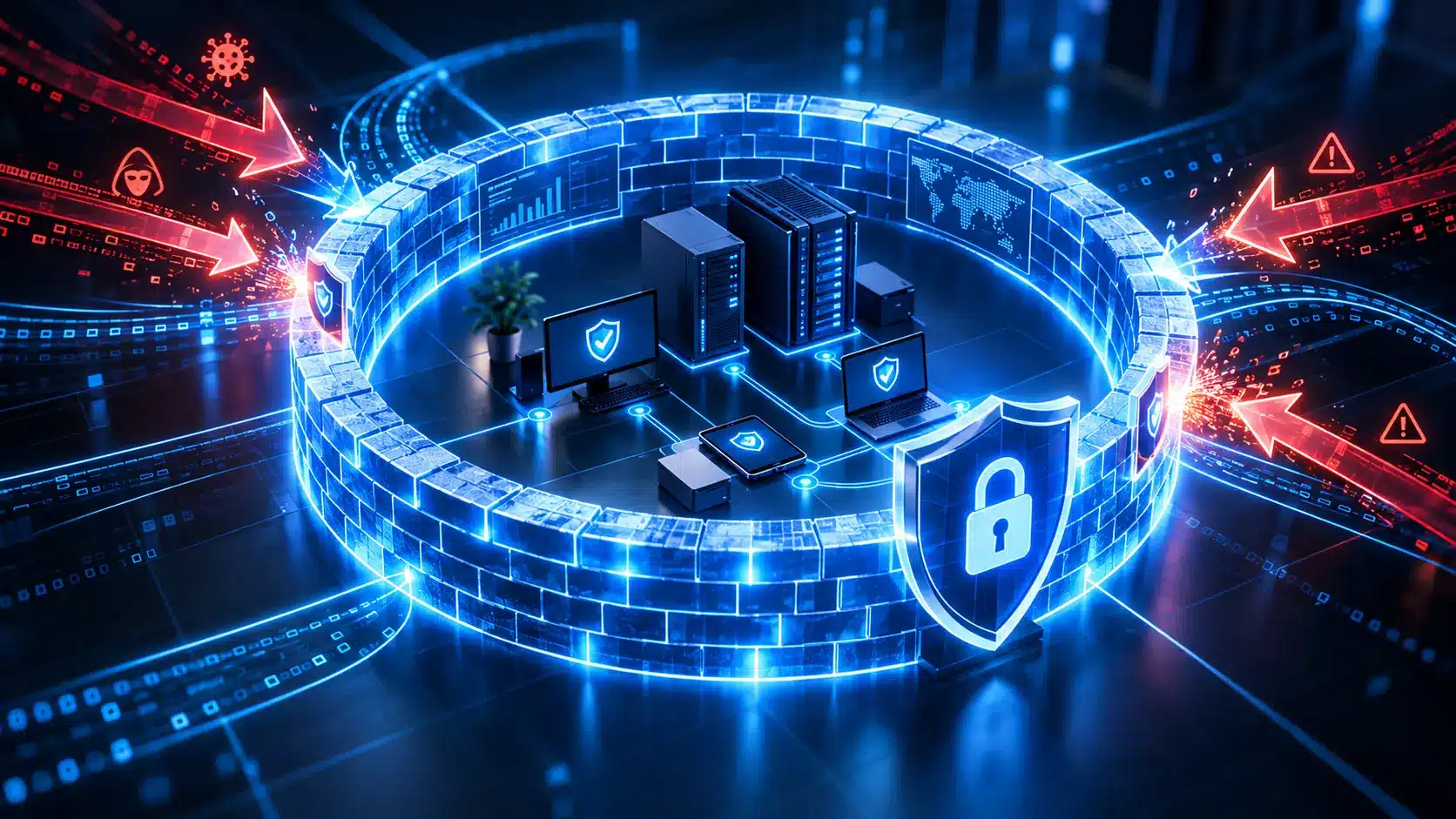
A firewall controls traffic moving between networks or security zones. Based on configured rules, it can allow approved connections while blocking traffic that should not be permitted.
For example, the UK's National Cyber Security Centre explains in its network security fundamentals guidance that firewalls can enforce boundaries between networks and control which traffic crosses those boundaries.
In a business environment, firewalls may control:
- Inbound internet connections
- Outbound network traffic
- Remote-access connections
- Traffic between network segments
- Guest and internal Wi-Fi traffic
- Administrative access
- Connections used by business applications
As a result, the quality of the firewall configuration directly affects how effectively those boundaries are enforced.
Why Firewalls Need Ongoing Management
Business networks rarely stay the same for long. Teams adopt new applications, replace equipment, move services to the cloud, and add remote workers.
When those changes happen, firewall rules may also need to change. For example, a temporary rule created during a migration may no longer be necessary once the project is complete.
Over time, unmanaged changes can create a complicated rule set that no longer reflects current needs. In practice, old exceptions can remain active simply because nobody remembers why they were added.
Regular firewall management helps prevent temporary changes from quietly becoming permanent.
Managed Firewall Services Include Rule Reviews
Managed firewall services should include regular review of active firewall rules and the reason each important rule exists.
A vendor may need temporary remote access. Similarly, a new application might need a specific connection while an older system may no longer be in use.
Once the business need changes, the firewall configuration should be reviewed as well.
The NCSC's Cyber Essentials requirements call for inbound firewall rules to have a documented business need and for unnecessary rules to be removed or disabled.
In other words, network access should exist because there is a current reason for it, not simply because the rule has always been present.
Firewall Firmware and Security Updates Matter
Firewalls run software and firmware just like other technology. Therefore, security vulnerabilities can be discovered after a device has already been installed.
When an update becomes available, someone needs to review the risk, plan the change, preserve the current configuration, and verify that network traffic continues to work afterward.
CISA and partner agencies recommend patching vulnerable network devices and monitoring infrastructure changes in their network infrastructure hardening guidance .
For this reason, firewall patching should be treated as an ongoing maintenance task rather than something performed only after a problem appears.
Recent Firewall Exploitation Shows Why Updates Matter
Internet-facing security devices can become attractive targets when attackers learn about exploitable vulnerabilities.
For instance, BleepingComputer reported in 2026 that Cisco confirmed active exploitation of a Secure Firewall Management Center flaw .
The lesson is not that firewalls are ineffective. Rather, security infrastructure itself requires maintenance because it also contains software that may need updates.
In short, a device protecting the network still needs to be protected and maintained.
Managed Firewall Services Include Monitoring
Managed firewall services can also provide visibility into firewall health, network activity, configuration changes, and security events.
Firewall logs may show blocked connections, unexpected remote access, unusual traffic, and administrative changes. When those events are reviewed, they can provide useful context about what is happening on the network.
Monitoring may help identify:
- Repeated blocked connection attempts
- Unexpected remote-access activity
- Changes to firewall rules
- Unusual network traffic
- Device health or performance issues
- Security alerts that require investigation
- Connectivity problems affecting applications
In addition, SecuraLynx's managed security monitoring services provide broader visibility across accounts, endpoints, networks, vulnerabilities, and other security systems.
Firewall Configuration Backups Support Recovery
Firewall configurations can become detailed as networks grow. Because of this, rebuilding a firewall manually after hardware failure or a configuration problem can take significant time.
Configuration backups provide a reference point that can help restore important rules and settings.
They are also useful before firmware upgrades or major network changes. If something goes wrong, administrators have a known configuration available for recovery.
SecuraLynx includes configuration backups within its managed network security services , alongside firewall configuration, audits, monitoring, updates, analytics, and ongoing support.
Regular Firewall Audits Help Catch Configuration Drift
Configuration drift happens when a firewall slowly moves away from its intended setup through repeated changes, temporary fixes, and new requirements.
No single change has to be dangerous. Yet over time, many small changes can create rules and settings that nobody clearly understands anymore.
A firewall audit may review:
- Active firewall rules
- Unused or outdated rules
- Administrative access
- Remote management settings
- Firmware and update status
- Network segmentation
- Logging and monitoring
- Configuration backups
By reviewing these areas regularly, businesses can identify configuration problems before those issues become permanent.
Managed Firewall Services Help Secure Remote Administration
Managed firewall services should also address how administrators access the firewall itself.
Remote administration is useful, especially when IT support is not physically on-site. At the same time, management interfaces should not be exposed more broadly than necessary.
Where remote management is required, businesses may use controls such as restricted trusted addresses, MFA, VPN access, or other safeguards appropriate to the environment.
This matters because someone who gains administrative control of the firewall may also be able to change how network traffic is handled.
Firewall Management Supports Network Segmentation
Firewalls can also help create boundaries between different areas of a business network.
For example, guest Wi-Fi does not need the same access as employee computers or internal servers. Similarly, sensitive systems may need tighter network rules than general office devices.
SecuraLynx's guide to guest Wi-Fi security explains why separating visitor traffic from internal resources can reduce unnecessary exposure.
As a result, segmentation can limit communication between systems that have no legitimate reason to interact.
Business Firewall Management Also Supports Performance
Firewall management is not only about blocking cyber threats. Network rules can also affect performance and application availability.
For example, a poorly planned configuration change may interrupt cloud applications, remote work, voice systems, or connections to business services.
On the other hand, overly broad rules may allow traffic the organization does not need.
A well-managed firewall balances security requirements with reliable business connectivity.
Managed Firewall Services Work With Endpoint Security
Managed firewall services protect network traffic, while endpoint security protects the devices employees use every day.
These protections complement each other. A firewall cannot stop every malicious process on a laptop, while endpoint security cannot provide every network-level control a firewall provides.
SecuraLynx's managed endpoint security services add device management, malware protection, vulnerability checks, patch management, monitoring, EDR, and incident support.
Together, network and endpoint controls provide multiple layers of protection rather than relying on one security technology.
Firewall Monitoring Adds Context to Security Alerts
Firewall data becomes more useful when it can be compared with alerts from endpoints, accounts, and other security tools.
For instance, unusual outbound network traffic may deserve more attention when an endpoint is also producing an EDR alert.
By comparing multiple signals, technicians can better determine whether activity is expected, misconfigured, or potentially suspicious.
This broader visibility is one reason managed network security works well alongside continuous monitoring.
Managed Firewall Services Can Support Compliance
Managed firewall services may also support compliance efforts through documented configuration, updates, access controls, monitoring, audits, and reporting.
Requirements differ by industry and framework. Even so, many organizations need evidence showing that security controls are actively maintained.
Regular firewall reviews can help provide that evidence. In addition, documented changes and audit results can make security controls easier to explain during assessments.
Signs Your Firewall May Need More Attention
Businesses may not always know whether their firewall is being maintained properly.
For example, warning signs can include:
- No clear record of the last firewall update
- Firewall rules have not been reviewed recently
- Temporary rules remain active long after projects end
- Configuration backups are missing
- Firewall alerts are generated but rarely reviewed
- Remote administration is broadly exposed
- Former vendors still have remote access
- Guest and internal networks are not clearly separated
- Network changes are poorly documented
- No one is responsible for firewall maintenance
These signs do not automatically mean a network has been compromised. Still, they suggest that firewall management deserves a closer review.
What Do Managed Firewall Services Include?
Businesses evaluating managed firewall services should look beyond the initial installation of the firewall.
Depending on the environment, a managed service may include:
- Firewall configuration
- Firewall rule management
- Firmware and security updates
- Monitoring and alert review
- Regular configuration audits
- Configuration backups
- Remote-access management
- Network segmentation support
- Performance monitoring
- Incident-response support
- Compliance reporting
- Technical support
The key difference is continuity. Instead of configuring the firewall once and forgetting about it, the device remains part of an ongoing network-security process.
How SecuraLynx Provides Managed Firewall Services
SecuraLynx provides managed network security, firewall, switching, and Wi-Fi services for organizations that need ongoing network protection and support.
The service includes professional configuration, regular audits, configuration backups, monitoring and response, firmware and security updates, analytics, compliance reporting, and technical support.
Because these services are managed together, firewall maintenance can stay connected to broader network requirements instead of being addressed only when something stops working.
Include Firewall Security in a Cybersecurity Assessment
A business may already have a firewall without knowing whether the current configuration still matches today's security needs.
A cybersecurity risk assessment can help identify exposed services, outdated configurations, vulnerabilities, weak access controls, and other network-security concerns.
For example, an assessment may uncover unnecessary internet-facing services or network rules that no longer have a clear business purpose.
From there, the organization can prioritize firewall improvements alongside endpoint security, monitoring, account protection, backups, and other cybersecurity controls.
Frequently Asked Questions
Why does a firewall need ongoing management?
Networks, applications, users, remote access, and vulnerabilities change over time. As a result, ongoing management helps keep firewall rules, updates, monitoring, and security settings aligned with those changes.
How often should firewall rules be reviewed?
The right schedule depends on the environment. In addition, rules should be reviewed when applications, vendors, remote access, or network requirements change.
Do firewalls need security updates?
Yes. Firewall software and firmware can contain vulnerabilities, so updates should be reviewed and applied through a controlled maintenance process.
What is a firewall configuration backup?
A configuration backup preserves firewall rules and settings. Because of this, it can support recovery after hardware problems, failed updates, or configuration errors.
Is a firewall enough for business cybersecurity?
No. Firewalls are one security layer. Businesses should also consider endpoint protection, identity security, monitoring, backups, email security, employee awareness, and incident response.
What are managed firewall services?
Managed firewall services provide ongoing firewall configuration, rule management, monitoring, updates, audits, backups, and technical support to help maintain business network security.
Make Managed Firewall Services Part of Your Network Security Strategy
Managed firewall services help businesses keep firewall configuration, rules, updates, monitoring, and backups aligned with a changing network environment.
In addition, ongoing management makes it easier to remove outdated rules, protect administrative access, review security activity, and maintain reliable connectivity.
Firewall security works best alongside endpoint protection, account security, monitoring, backups, employee awareness, and regular cybersecurity assessments.
Ultimately, the firewall should remain an actively managed security control rather than a device that disappears into a network closet after installation.
When Was Your Firewall Last Reviewed?
SecuraLynx can help assess firewall configuration, network security, monitoring, firmware, configuration backups, Wi-Fi, and other controls protecting your environment.
As a next step, a cybersecurity assessment can identify potential gaps and help determine which managed network-security services fit your organization.
Request a Cybersecurity Assessment